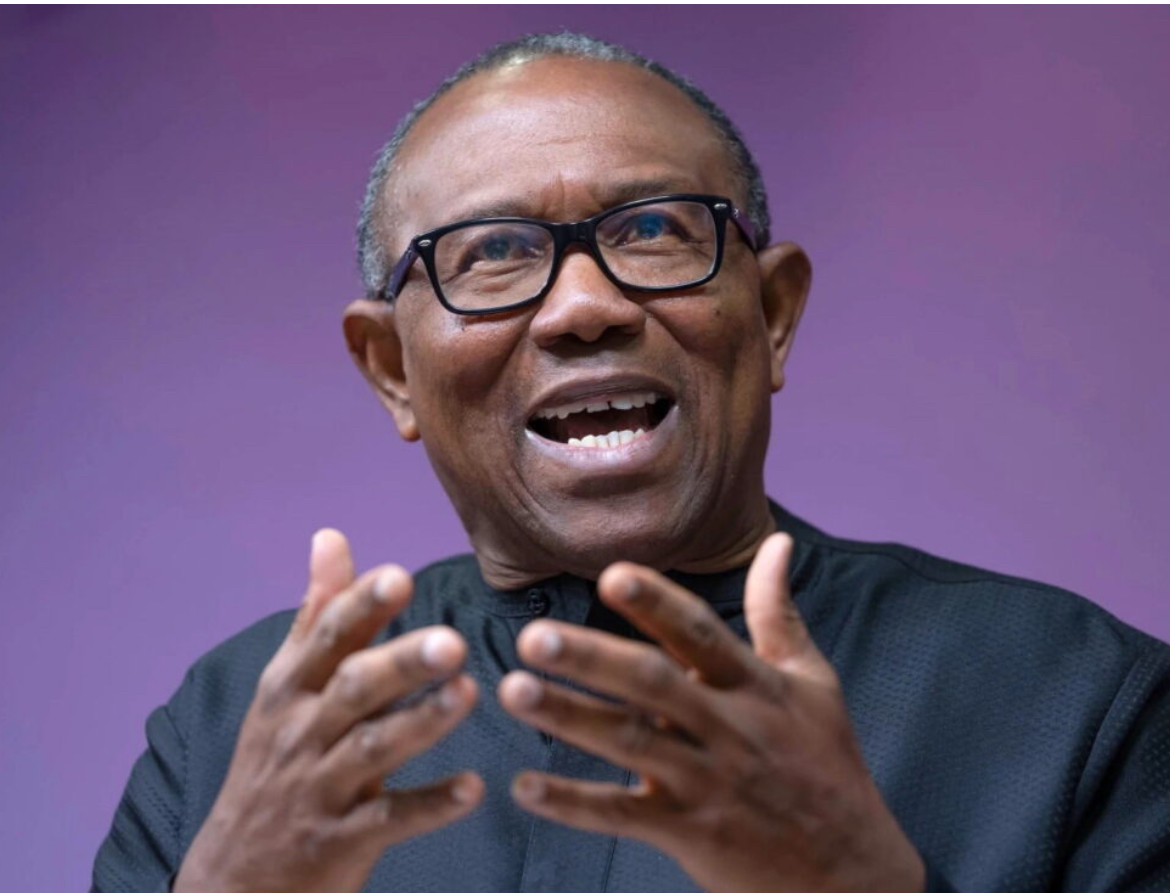
The presidential candidate of the Nigeria Democratic Congress, NDC, Peter Obi, has pledged to run a campaign devoid of ethnicity, religion and other forms of division ahead of the 2027 general elections.
Obi made the declaration on Friday while addressing journalists at a world press conference in his hometown of Onitsha, Anambra State, where he also outlined his plans for the development of the country.
The former Anambra State governor described the 2027 election as a defining moment for Nigeria’s democracy, urging Nigerians to carefully examine the records, ideas and programmes of all candidates seeking their mandate.
He said Nigeria was facing serious challenges, including widespread poverty, insecurity, unemployment, weak infrastructure, unreliable power supply and the high cost of doing business.
“According to the IMF, 63%, or over 140 million Nigerians, live at or below the national poverty line, while humanitarian agencies estimate that 35 million people will need food assistance during the 2026 lean season.
“About 3.6 million Nigerians remain internally displaced, largely because of conflict and insecurity,” Obi said.
He added that millions of young Nigerians enter the labour market every year but struggle to find productive opportunities, stressing that the situation reflected the daily realities of families, farmers, workers, students and businesses.
Obi rejects ethnic, religious politics
Obi urged Nigerians to demand accountability from political candidates and reject campaigns based on ethnicity, religion, propaganda and personal attacks.
He said political actors should focus on presenting practical solutions to the country’s challenges rather than exploiting divisions among Nigerians.
“We should debate ideas without hatred, compete without violence, and disagree without weakening the bonds that unite us. When Nigerians make their choice, that choice must be respected,” he said.
The NDC candidate added that Nigerians should reject any campaign driven by “propaganda, ethnicity, religion, elitism, or cronyism.”
He promised that his campaign team would travel across the country to listen to citizens, understand their concerns and present what he described as a competent and compassionate plan to reset the country.
Obi outlines plans for six geopolitical zones
The presidential hopeful said Nigeria’s diversity could be turned into an economic advantage if each geopolitical zone was allowed to develop its comparative strengths while remaining connected to a productive national economy.
For the North-West, Obi said his administration would focus on agriculture, livestock, irrigation, agro-processing and manufacturing, while strengthening education and security.
He said the North-East would require accelerated reconstruction, restoration of livelihoods and expansion of agriculture, education, enterprise and regional trade.
For the North-Central, he identified food production and processing as major areas of focus, alongside the responsible development of the region’s mineral resources.
Obi said the South-West would build on its existing strengths in manufacturing, technology, finance, trade and the creative economy.
For the South-East, he promised to strengthen the region’s entrepreneurial and industrial base through improved infrastructure, connectivity and access to investment.
He said the South-South would be supported to derive greater value from its oil and gas resources while expanding maritime services, fisheries and agriculture, alongside stronger environmental protection.
According to him, the Federal Capital Territory would also receive attention through improved urban planning, transportation, housing, sanitation, security and public services.
“Every region must produce. Every region must contribute. Every region must benefit,” he said.
Obi highlights governance experience
The former Anambra governor also highlighted his private-sector experience, education and time in public office as part of the experience he would bring to the presidency.
He said government must manage public resources responsibly, establish clear priorities and measure the outcomes of its decisions.
“Public office is not a reward; it is a responsibility to the people,” Obi stated.
He said that during his tenure as governor of Anambra State, he prioritised education, healthcare, infrastructure, fiscal discipline and institutional capacity.
While admitting that his record was not perfect, Obi said his experience in Anambra could provide Nigerians with a basis for assessing his understanding of public leadership.
Obi praises Kwankwaso’s experience
Obi also spoke about his running mate, Senator Rabiu Musa Kwankwaso, describing their governing experiences as different but complementary.
According to him, Kwankwaso’s tenure as governor of Kano State focused strongly on education, technical training, scholarships, infrastructure and human-capital development.
He said Kwankwaso’s investments in education and skills demonstrated the importance of investing in people as a long-term strategy for development.
“Our experiences are different, but our conclusion is the same: Nigeria must invest in its people and manage public resources with discipline,” Obi said.