

SEDC Challenges South-East Businesses to Embrace Partnerships, Build Enduring Institutions for Regional Prosperity
The South East Development Commission (SEDC) has called on entrepreneurs, investors and business leaders across the South-East to move beyond individual enterprise and embrace strategic partnerships, collective investment and stronger corporate structures capable of driving sustainable regional development.
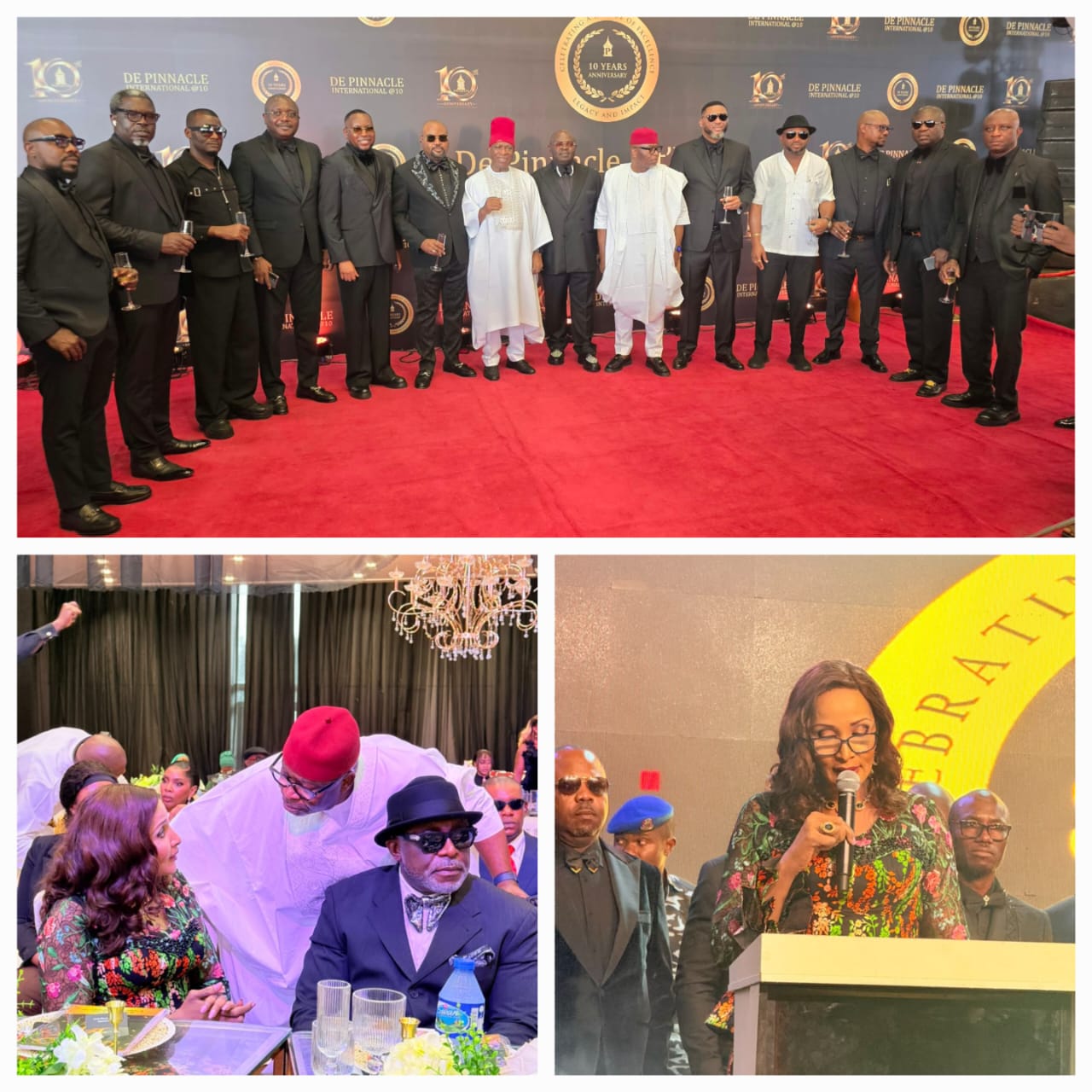
The Executive Director, Projects of the Commission, Hon. Toby Okechukwu, made the call while representing the SEDC at the 10th Anniversary celebration of De Pinnacle International Social Club, held at the Bola Ahmed Tinubu International Conference Centre, Abuja.
Okechukwu, who spoke on the theme, “Regional Development, Public-Private Partnership and the Role of Institutions like SEDC in Shaping the Future of South-East Nigeria,” stressed that the economic transformation of the region could not be achieved through individual prosperity alone.
According to him, the South-East possesses enormous human capital, entrepreneurial energy and social cohesion, but these strengths must be deliberately converted into organised economic structures, collective investments and institutions that can create opportunities for generations yet unborn.
He observed that the people of the South-East have demonstrated remarkable unity and communal spirit in cultural celebrations, marriages, burials and other social activities, but argued that the same level of cooperation must be replicated in business and investment.
Okechukwu illustrated the point with the popular Igbo proverb, “Otu osisi anaghi eme ohia,” meaning that one tree cannot make a forest.
He said the principle should guide the region’s economic thinking, stressing that collective action, strategic partnerships and shared ownership could significantly increase the capacity of businesses to contribute to regional development.
Build Businesses That Will Outlive Their Founders
The SEDC Executive Director challenged South-East entrepreneurs to deliberately build businesses that would survive beyond their founders and become enduring institutions.
He emphasised the importance of proper corporate governance, transparent accounting systems, effective boards, institutional structures and succession planning, noting that businesses should not collapse simply because their founders are no longer available to run them.
He said stronger corporate structures would also make businesses more attractive to investors, facilitate access to capital and enable them to expand beyond their immediate environments.
Okechukwu maintained that public-private partnerships could play a critical role in transforming individually owned businesses into sustainable institutions capable of creating jobs, supporting communities and contributing meaningfully to the regional economy.
From Trading to Manufacturing
The SEDC official further challenged entrepreneurs in the South-East to move beyond trading and place greater emphasis on manufacturing and value addition.
He noted that manufacturing would create stronger economic value chains, generate employment, stimulate local production and retain greater economic value within the region.
According to him, the future of the South-East economy must be anchored not only on commerce but also on production, processing, industrialisation, technology and innovation.
He also highlighted the importance of the capital market in supporting business expansion, citing the late Sir Louis Odumegwu Ojukwu, whom he described as one of the pioneers of Nigeria’s capital market.
Okechukwu urged contemporary South-East entrepreneurs to study and take advantage of opportunities available within the capital market to mobilise long-term funds for business growth and large-scale investments.
SEDC Positions South-East for Investment Destination Status by 2035
Speaking on the mandate of the South East Development Commission, Okechukwu clarified that the Commission was not established to compete with the private sector but to provide a platform for investment coordination, development partnerships and sustainable regional growth.
He disclosed that the SEDC was working towards making the South-East a preferred investment destination in Africa by 2035, through coordinated interventions and partnerships capable of unlocking the region’s economic potential.
He identified some of the Commission’s initiatives as the South East Investment Company (SEIC), designed to aggregate capital and de-risk large-scale projects, as well as programmes covering agriculture, sports infrastructure and venture capital.
According to him, the Commission’s agricultural development pilot had already commenced in Nomeh, Nkanu East Local Government Area of Enugu State, with emphasis on processing, production and the development of agricultural value chains.
He also highlighted the SEGRID initiative, which is aimed at strengthening grassroots sports infrastructure and harnessing the talents and potential of young people across the region.
$50 Million Venture Capital Programme
Okechukwu further disclosed that the Commission was working on a $50 million venture capital programme aimed at supporting innovative ideas and helping entrepreneurs transform promising concepts into sustainable institutions.
He explained that the initiative would focus on equity investment rather than handouts, thereby creating a model capable of supporting businesses while encouraging accountability, innovation and long-term sustainability.
He said such interventions would help bridge the gap between innovative ideas and the capital required to transform them into viable businesses with the capacity to create employment and wealth.
Okechukwu Challenges De Pinnacle to Move from Social Unity to Economic Ownership
Turning his attention to De Pinnacle International Social Club, which was celebrating a decade of existence, Okechukwu challenged the members to leverage the unity and achievements they had built over the past ten years for broader economic development.
He urged the club to consider moving from social association to collective economic ownership by establishing businesses and investment platforms capable of benefiting its members and the wider South-East.
Among his suggestions was the establishment of a microfinance bank owned by members of the club, which could provide financial support to traders, farmers and other small-scale entrepreneurs.
He also encouraged the club to explore larger-scale investments in specialised markets, industrial parks, logistics and other strategic sectors through partnerships and collective capital.
According to him, such investments would demonstrate how social organisations could transform their collective strength into sustainable economic institutions.
“From a Decade of Excellence to a Century of Enduring Institutions”
Okechukwu said building a prosperous South-East was essential to creating economic opportunities that would provide the people with greater security, dignity and prosperity both within the region and wherever they may live.
He called for renewed unity among the people of the South-East, stressing that collective strength remained indispensable to achieving sustainable regional development.
As De Pinnacle International Social Club marked its 10th anniversary, the SEDC Executive Director challenged the members to look beyond celebrating the past and begin building institutions for the future.
He urged them to move “from a decade of excellence to a century of enduring institutions,” stressing that the time had come for the South-East to convert its vast social capital, human resources, entrepreneurial spirit and communal bonds into lasting economic prosperity.
His message ultimately centred on a clear challenge to the region: South-East prosperity must no longer depend solely on individual success; it must be built through partnerships, collective investment and institutions strong enough to outlive their founders.