
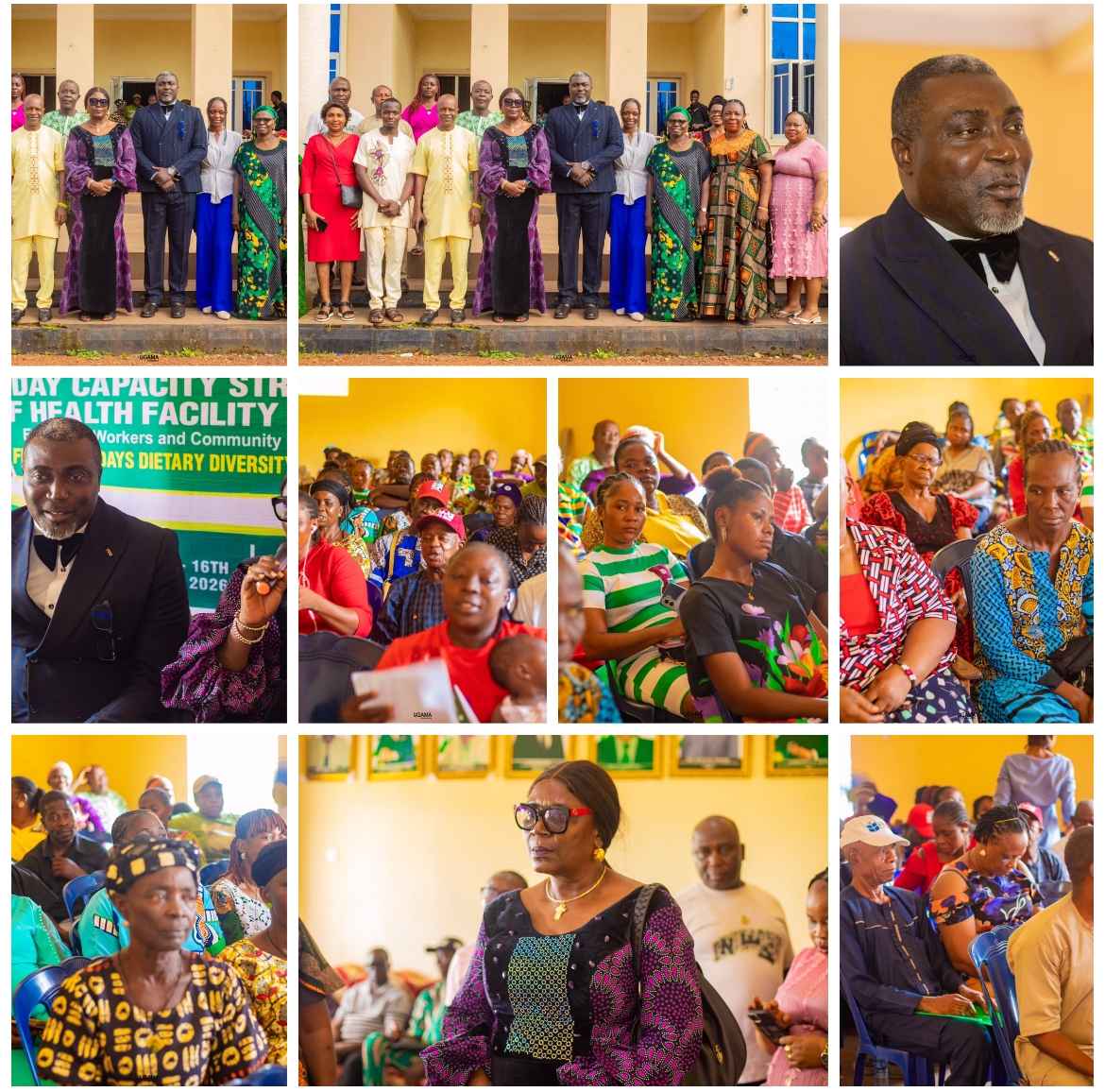
Commissioner Leads Four-Day Capacity-Building Programme on First 1,000 Days; Enugu Government, UNICEF Promote Dietary Diversity, Sustainable Agriculture and Stronger Household Livelihoods
The Enugu State Government, in partnership with the United Nations Children’s Fund (UNICEF), has intensified efforts to combat child malnutrition and poverty through a four-day capacity-strengthening programme for frontline health workers, agricultural extension workers and community caregivers in Oji-River Local Government Area.
The initiative, which commenced on Tuesday, October 13, 2026, at the Oji-River Local Government Council Headquarters, is designed to improve maternal, infant and young child nutrition by promoting dietary diversity during the First 1,000 Days of a child’s life, from conception to the second birthday.
The programme underscores the commitment of the administration of Governor Peter Ndubuisi Mbah to improving community welfare, strengthening human development and addressing poverty through practical, sustainable interventions that directly benefit families.
At the forefront of the initiative is the Honourable Commissioner for Human Development and Poverty Eradication, Professor Benedett Ekwutosi Okoli, who has emphasised the importance of proper nutrition during early childhood while advocating collective action, community participation and sustainable livelihoods as essential strategies for combating malnutrition and poverty.
The training seeks to equip participants with practical knowledge of dietary diversity, animal husbandry and year-round crop production, enabling households to improve food availability, nutritional practices and economic resilience.
PROF. OKOLI: FIRST 1,000 DAYS CRUCIAL TO CHILD DEVELOPMENT
Speaking at the flag-off ceremony, Professor Okoli highlighted the critical importance of adequate nutrition during the first 1,000 days of a child’s life, describing the period as fundamental to physical growth, overall health and mental development.
She stressed that appropriate nutrition, beginning during pregnancy and continuing through the child’s second birthday, could significantly improve health outcomes while contributing to poverty reduction in beneficiary communities.
The Commissioner explained that the programme goes beyond nutrition education, as it also seeks to empower participants with practical skills that can improve household food production, strengthen family livelihoods and promote self-reliance.
She urged participants to embrace teamwork and organise themselves into groups to maximise the benefits of the initiative.
According to her, collective participation and cooperation would enhance sustainability, strengthen the implementation of the programme at the grassroots and ensure that the knowledge acquired translates into meaningful benefits for families.
Professor Okoli’s emphasis on cooperation reflects the state government’s broader approach to human development, which recognises that sustainable progress requires collaboration among government institutions, development partners and community stakeholders.
ENUGU GOVERNMENT, UNICEF DEEPEN PARTNERSHIP AGAINST MALNUTRITION
The collaboration between the Enugu State Government and UNICEF represents a coordinated effort to tackle malnutrition through capacity building, community engagement and improved household nutrition practices.
By bringing together health facility officers-in-charge, agricultural extension workers and community caregivers, the programme seeks to strengthen the link between healthcare, food production and family nutrition.
The initiative recognises that addressing malnutrition requires more than access to food. Families also need practical knowledge of balanced diets, dietary diversity, appropriate feeding practices and sustainable ways to produce nutritious food throughout the year.
Through the training, participants are expected to become better equipped to educate mothers and caregivers, support improved nutrition practices and encourage productive household activities capable of reducing poverty.
The programme also seeks to promote a community-based approach in which beneficiaries apply their newly acquired knowledge within their households and share relevant practices across their communities.
OJI-RIVER CHAIRMAN COMMENDS GOV. MBAH, UNICEF, PROF. OKOLI
In his address, the Executive Chairman of Oji-River Local Government Area, Hon. Greg Chijioke Anyaegbudike, expressed satisfaction with the selection of the council area as a beneficiary of the initiative.
He noted that Oji-River’s agricultural potential and the expertise of its people provided a favourable environment for implementing a programme that combines improved nutrition with sustainable food production and poverty reduction.
The council chairman appreciated the Enugu State Government and UNICEF for extending the initiative to the area, describing the training as an opportunity to equip residents with relevant knowledge and practical skills to improve their livelihoods.
In an exclusive interview with UGAMATV, Anyaegbudike commended the organisers for bringing the programme to Oji-River and reaffirmed his administration’s commitment to supporting its successful implementation.
He pledged to monitor progress across the various communities to ensure that participants apply the skills acquired and that the initiative produces tangible benefits for residents.
His commitment to monitoring the programme is expected to support local ownership and strengthen efforts to translate the training into practical improvements in household nutrition and economic well-being.
UNICEF HAILS PARTICIPANTS’ ENTHUSIASM, REAFFIRMS COMMUNITY NUTRITION FOCUS
In her goodwill message, the UNICEF Local Government Area Nutrition Facilitator, Mrs. Amara Chukwu Oko, expressed delight at the enthusiasm demonstrated by participants and their willingness to acquire new knowledge.
She highlighted the importance of the initiative in strengthening nutrition practices at the community level and equipping participants with practical skills to improve the nutritional well-being of mothers and children.
The programme also attracted a representative of the UNICEF Nutrition Specialist at the Enugu Field Office, Mrs. Ngozi Onuorah; private nutrition consultant, Mrs. Abigail Ishaya; and other members of the programme team.
Their participation reflected the collaborative approach underpinning the initiative, which seeks to strengthen the capacity of frontline workers and community-based actors to address nutrition challenges.
TRAINING PROMOTES DIETARY DIVERSITY, AGRICULTURAL PRODUCTIVITY
Providing an overview of the training, the State Nutrition Officer, Mrs. Onwuzuluike Loveth, outlined the programme’s objectives and major activities, emphasising dietary diversity and practical approaches to improving household nutrition and food production.
The inclusion of agricultural extension workers alongside health professionals and community caregivers is intended to encourage a more integrated approach to nutrition.
Through animal husbandry, crop production and improved dietary practices, beneficiaries are expected to explore practical ways of increasing access to nutritious foods while strengthening household livelihoods.
The initiative also seeks to encourage families to make better use of locally available food resources and adopt sustainable production methods that can support year-round food availability.
BENEFICIARIES EXPRESS OPTIMISM
Some participants and beneficiaries, including Mr. Emmanuel Okeafor, Mrs. Chukwuma Ujunwa and Mrs. Chineke Clementina, expressed gratitude for the opportunity to participate in the training.
They noted that the knowledge acquired would improve their capacity to address child malnutrition, strengthen family nutrition and adopt practical strategies for reducing poverty within their respective communities.
The beneficiaries expressed optimism that applying the lessons from the programme would enable them to make better-informed decisions about food choices, household production and the nutritional needs of mothers and children.
Their expectations highlight the importance of translating capacity-building activities into sustainable practices that improve the everyday lives of families.
PROF. OKOLI ASSURES BENEFICIARIES OF SUSTAINABILITY
Speaking separately with UGAMATV, Professor Okoli reiterated the Enugu State Government’s commitment to ensuring that the programme delivers lasting benefits beyond the training sessions.
She disclosed that participants would be organised into cooperative societies to strengthen collaboration, support the sustainability of their activities and improve the long-term impact of the intervention.
The cooperative arrangement is expected to provide a platform for beneficiaries to work together, pursue shared opportunities and sustain activities that support improved nutrition and household livelihoods.
The Commissioner’s assurance reinforces the state government’s determination to move beyond one-off training sessions towards a more sustainable approach that encourages continued community participation and practical economic empowerment.
By linking nutrition education with agricultural production and cooperative development, the initiative seeks to address some of the underlying factors that contribute to malnutrition and household poverty.
PROGRAMME EXPANDS ACROSS ENUGU STATE
The training has previously been conducted in Igbo-Etiti, Udi, Nkanu West and Enugu East local government areas, with plans to extend the initiative to Aninri and other parts of the state.
The expansion is expected to broaden access to nutrition education and practical livelihood skills while strengthening the capacity of community-level actors to support maternal and child health.
The continued rollout also provides an opportunity to extend the benefits of the Enugu State Government-UNICEF partnership to more households, particularly those requiring improved access to nutrition information and sustainable food production practices.
A STRATEGIC INVESTMENT IN CHILDREN’S FUTURE
The Oji-River training represents an important step in the broader effort to improve child nutrition, strengthen household resilience and reduce poverty through community-based interventions.
For the initiative to achieve its full potential, the knowledge acquired must translate into sustained improvements in feeding practices, household food production and the nutritional well-being of mothers and children.
The planned cooperative societies, alongside the involvement of local government authorities, health workers, agricultural extension officers and community caregivers, are expected to support the sustainability of the programme.
With Professor Benedett Ekwutosi Okoli providing leadership from the Ministry of Human Development and Poverty Eradication, and UNICEF working alongside the Enugu State Government, the initiative reflects a shared commitment to addressing malnutrition through education, practical empowerment and community participation.
Ultimately, the success of the programme will be measured not merely by the number of participants trained, but by the number of households that adopt improved nutrition practices, the communities that become more self-reliant and the children who benefit from a healthier start in life.
For Enugu State, the message is clear: investing in child nutrition, empowering families and tackling poverty at the grassroots are essential steps towards building healthier communities and a more prosperous future.
UGAMATV NEWS — Your One-Stop Media Solution.